A letter from the Finanzamt, explained
The Finanzamt is the German tax office. Its letters range from harmless requests to the all-important tax assessment. Here is how to tell which is which and what to do.
If it’s a Steuerbescheid (tax assessment) and you disagree, the remedy is Einspruch — usually within one month of notification. The exact date is in the Rechtsbehelfsbelehrung at the end (see how to read a Bescheid).
What kind of letter is it?
- Steuerbescheid — the tax assessment. States your refund or back-payment and carries a one-month objection period.
- Anforderung / Erinnerung — a request for documents or a reminder to file your return. Usually a stated deadline to respond.
- Vorauszahlungsbescheid — sets quarterly prepayments for the current year.
- Mitteilung / Steuernummer — an information notice, e.g. your new tax number.
How to check a Steuerbescheid
- Compare with your return. Line up the figures the Finanzamt used against what you declared — income, work expenses (Werbungskosten), special expenses (Sonderausgaben).
- Read the “Erläuterungen”. If the office deviated from your return, the reason is explained there.
- Check the status. Note whether it was issued “under review” (unter Vorbehalt der Nachprüfung) or provisionally (vorläufig) — this can allow later changes.
- Check the bottom line. Does the refund or back-payment match your own calculation?
How to file an Einspruch
Write to the Finanzamt that issued the assessment (address and tax number are on the letter). A single sentence meets the deadline: that you file an Einspruch against the assessment of [date]. The detailed reasons can follow later. Keep proof of sending.
Frequently asked
Widerspruch or Einspruch against the Finanzamt?
How long do I have?
Do I have to reason the Einspruch immediately?
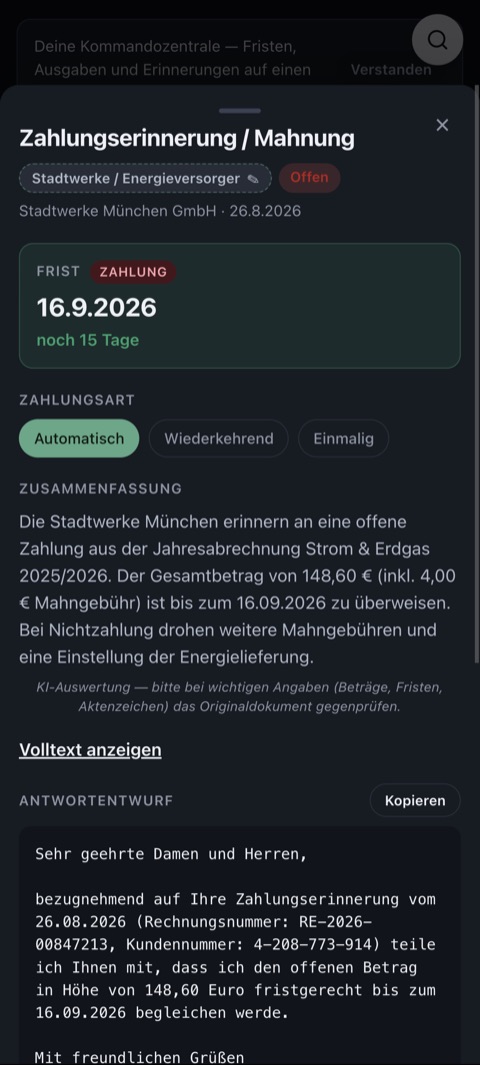
Read your tax letter in seconds
Upload a photo or PDF – Mein Büro finds the sender, the amount and the deadline, counts down the days and suggests what to do next. It can also draft your reply in German, ready to send to the authority.
Scan your first letter free5 scans/month free · no credit card · EU servers · Android app available